

How Shippers Can Navigate Change as Amazon Ends FBA Prep
Uncategorized
October 16, 2025
Uncategorized
October 16, 2025
Amazon has announced a significant change to its Fulfillment by Amazon (FBA) program: its FBA Prep Services will officially end on January 1, 2026. For small- and mid-sized businesses, this marks the end of relying on Amazon for labeling, packaging, product protection, and compliance support. In other words, shipping your inventory to Amazon for preparation before fulfillment will no longer be an option. The responsibility for product prep now falls entirely on sellers—making it critical to determine your new process before the deadline.
Before sounding the alarm, there is some good news. Amazon explains that the decision reflects a natural reallocation of resources, as most vendors no longer require assistance with prep and have already transitioned to self-managed or third-party solutions. Many sellers are already ahead of this curve—but for those who are not, there are effective, scalable alternatives to ensure a smooth transition.
Today, you can find packaging solutions that are tailored to your products, enhance brand presentation, and reduce costs by conserving materials. A broad range of packaging converters can cover any application, with different sizes and installation options to accommodate the layout of your packing areas. As your business scales operations, semi and fully automated solutions can provide steady streams of packaging materials where they are most needed, and even erect and right-size boxes to help control freight charges. The change also opens the door to more innovative fulfillment strategies—whether by partnering with specialized third-party prep providers or by adopting affordable automation systems, such as Ranpak’s sustainable packaging technologies, which deliver speed, consistency, and environmental benefits.
Ultimately, this is an opportunity to strengthen your operations, build resilience, and take direct control over your fulfillment and branding strategy while embracing the use of sustainable materials that are easy for end-customers to recycle. By managing prep in-house or through trusted partners, you can operate leaner, smarter, and more strategically than ever before.
Amazon’s FBA prep services acted as a convenience layer for sellers who didn’t want to manage the nitty-gritty of packaging and compliance. For a fee, Amazon would:
In short, sellers could ship products directly from a manufacturer or distributor to Amazon’s fulfillment centers and Amazon would make sure those products were “FBA-ready” before moving into its storage and distribution system. This setup offered sellers a high-level of convenience but sacrificed their ability to maintain direct control over the packaging process.
With FBA prep going away, sellers must take ownership of these steps before products ever arrive at Amazon. That means:
This change isn’t limited to standard FBA shipments. Namely, no Amazon service will include FBA prep anymore. Period. This means that the end of FBA prep services also includes an end of prep services across the following programs:
Ultimately, the perceived “safety net” of Amazon handling these tasks is no more. But in exchange, you gain an opportunity to control costs, packaging quality, and customer experience—if the right systems are in place.
So where to go from here? The real opportunity lies in choosing the right level of control and automation for your packaging operations that can also deliver ROI and operational benefits—and Ranpak offers a path that fits businesses of all sizes.
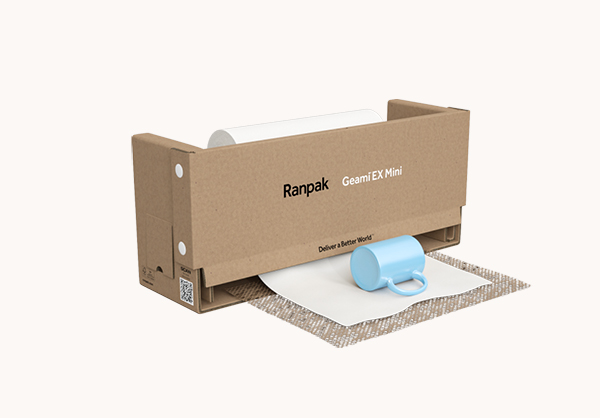
Ranpak offers packaging options that deliver both compliance and customer satisfaction without relying on plastic solutions, perfect for packing environments in small business operations. These environments will often feature packing stations built around tables where individual packers need access to the converters and materials they will be using. Any solutions introduced within these environments will need to be compact, ergonomic, and easy to use to ensure that packers can operate at peak efficiency. Scalability is another critical element, making systems that can accommodate multiple packers using batch production or even automated distribution extremely valuable.
With wrapping being a significant part of the prep to protect items from abrasions, cover corners, and more during shipment, looking at wrapping solutions that are easy to adopt is an important step when getting ready for Amazon compliance. Ranpak’s Geami® wrapping line is purpose-built for this: patented technology quickly and easily turns flat kraft paper into a 3D honeycomb structure that cushions and protects products during shipping – no tape, no plastic bubbles, no mess – and a solution that can reduce damage rates, in some cases to less than 1%, compared to plastic bubble solutions. Highly affordable converters like the Geami WrapPak EX Mini are compact enough to sit at a single packing station, while larger systems like the Geami HV streamline higher-volume workflows. With training from Ranpak’s packaging experts, it’s possible for packers to conserve up to 20% of the materials they would otherwise use for each job.
For businesses suddenly taking on their own prep responsibilities, this means that Geami provides an easy, space-saving way to wrap items sustainably and professionally before sending them into Amazon’s fulfillment network. It also means that customers who might have otherwise received their orders shipped using plastic can now gain the benefit of 100% recyclable, attractive honeycomb paper instead.

Ranpak’s newest wrapping converter Geami MV adds even more speed and consistency with powered operation and a small solution profile, ensuring that sellers can keep up with demand while maintaining packaging standards that meet FBA’s strict requirements. Unlike plastic bubble wrapping, all Geami paper is fully curbside recyclable within household waste-paper bins and is more brand-friendly for customers who care about sustainability. Whether you’re shipping a few dozen fragile items a day or preparing hundreds of units for Amazon, Ranpak’s wrapping solutions help SMBs transition smoothly from Amazon’s soon-to-be retired prep service to their own controlled, cost-efficient, and eco-conscious workflow.
Perhaps wrapping isn’t applicable to your fulfillment process, but blocking and bracing is. Cushioning is another process that needs to be handled in a compliant manner. Small- and medium-sized businesses that rely on manual packing processes need to identify solutions that work for their floor space, are easy for their packers to operate, and can keep costs down through material conservation.
Ranpak’s PadPak Guardian™ cushioning system produces robust paper pads that absorb shock and protect items inside cartons. Its key features include:
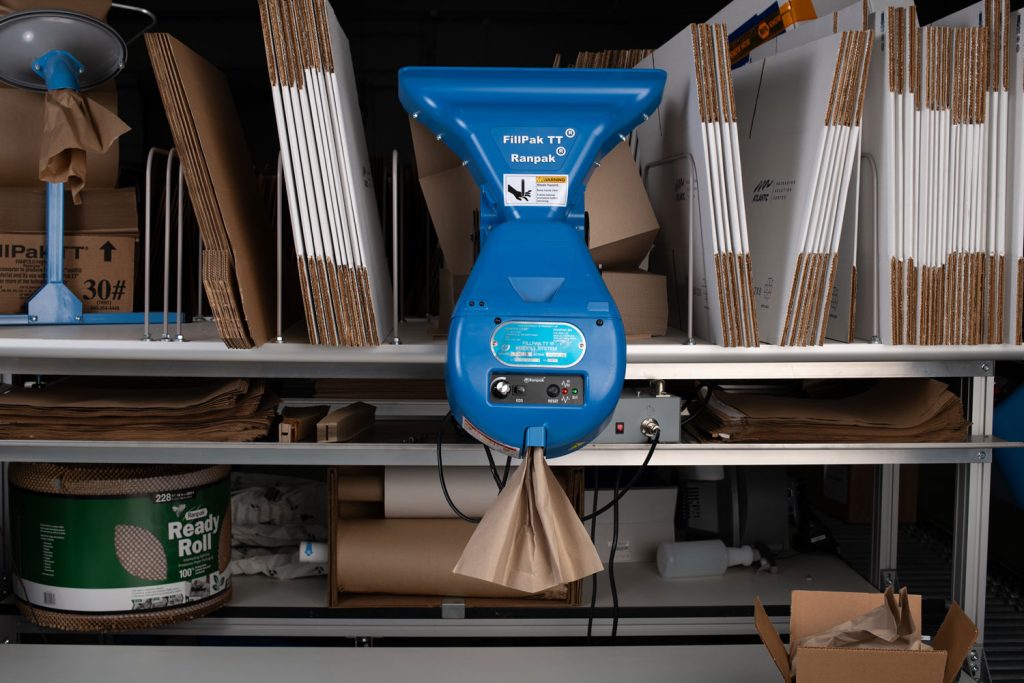
In practice, PadPak Guardian™ gives sellers a scalable cushioning solution they control — something Amazon used to provide behind the scenes. For fragile or heavier goods, this means you don’t need to over-engineer packaging; you can deliver protection tailored to your products’ needs.
Ranpak’s FillPak® line is designed to fill the “empty space” inside cartons to prevent product shifting during transport. Void fill systems from Ranpak take fanfold kraft paper and dispense it into a high-volume, high-quality void fill that is dispensed directly into the box. Solutions include:
For sellers now needing to take on prep duties, FillPak means you can automate or semi-automate the process of filling void space (by taking advantage of automated pad production modes) — reducing labor and errors and ensuring the products arrive undamaged.
Business with larger shipping operations will likely already have some capabilities required to meet FBA compliance, which means that scaling their operation is the next priority.
As shipping volumes increase, semi- and fully-automated packaging solutions can help keep up the pace while remaining compliant. For businesses that have a need for increased packer productivity, especially with warehouse layouts with restricted access to floor space, semi-automated solutions can help keep pace with demand without overcomplicating operations. For example, Ranpak’s PadPak® Multi-Station delivers a steady supply of compliant dunnage to multiple packers directly to their individual workstations all from a single converter, ensuring consistency, speed, and protection across your packing lines. This middle ground gives growing businesses the flexibility to scale without the same level of investment that full automation represents.
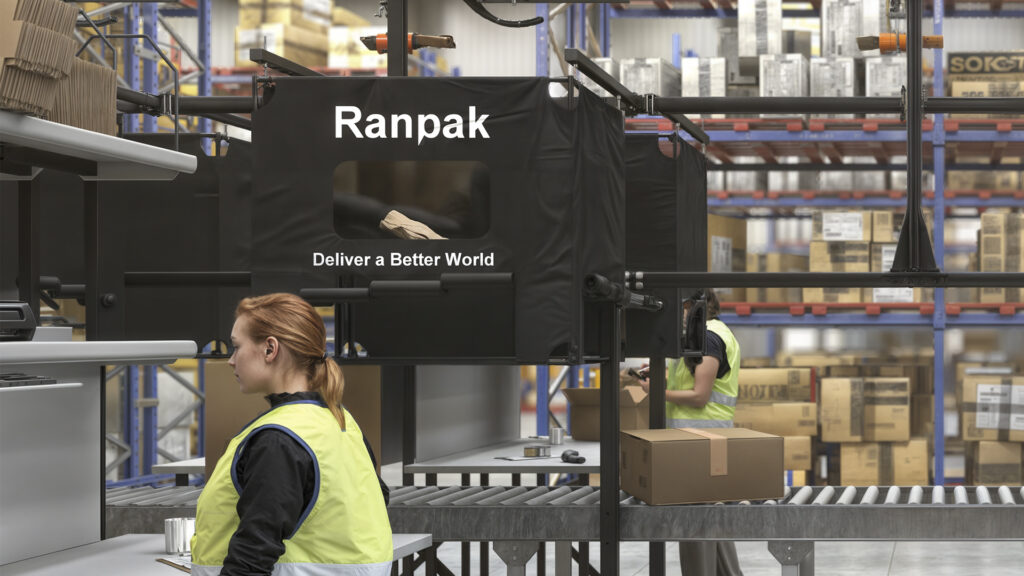
However, when businesses need to optimize for throughput and packaging quality at scale, there is nothing else like fully automated end-of-line packaging systems. With the ability to create optimized packaging flows for end-of-line operations, Ranpak takes packaging to the next level, helping meet Amazon standards with ease. Solutions like Form’it!™ case erectors and Cut’it!™ EVO right-sizing machines not only guarantee that every package is built with the right fit and strength, but they also streamline workflows and synergize with features like automatic label application—a key element of compliance with Amazon’s shipping standards. The result? High-quality, ready-to-ship packages that meet compliance standards, using sustainable materials while reducing material waste, that elevate your customers’ unboxing experience—all while running with maximum efficiency.

Ranpak’s portfolio makes the transition away from FBA prep not just manageable, but a strategic and easily scalable upgrade, whether you’re hand-packing a few dozen boxes a day or running a high-volume warehouse.
No Matter Your Budget, Ranpak experts are here to help

You are now leaving the Ranpak website. The website you will be entering is not owned or operated by Ranpak and/or its subsidiaries. The content, products and information contained on third party websites are not owned or controlled by Ranpak and/or any of its subsidiaries. Therefore, Ranpak makes no representations about, does not endorse or adopt, and is not responsible or liable for damages relating to the third party, its products or services, its website, its privacy policies or practices, or the content of the third party website.

